Nadie me pregunta nunca cómo ha ido el viaje. Me abren, me sacan lo que llevo dentro y, como mucho, me doblan para reciclarme. Así que hoy, por una vez, voy a contarlo yo.
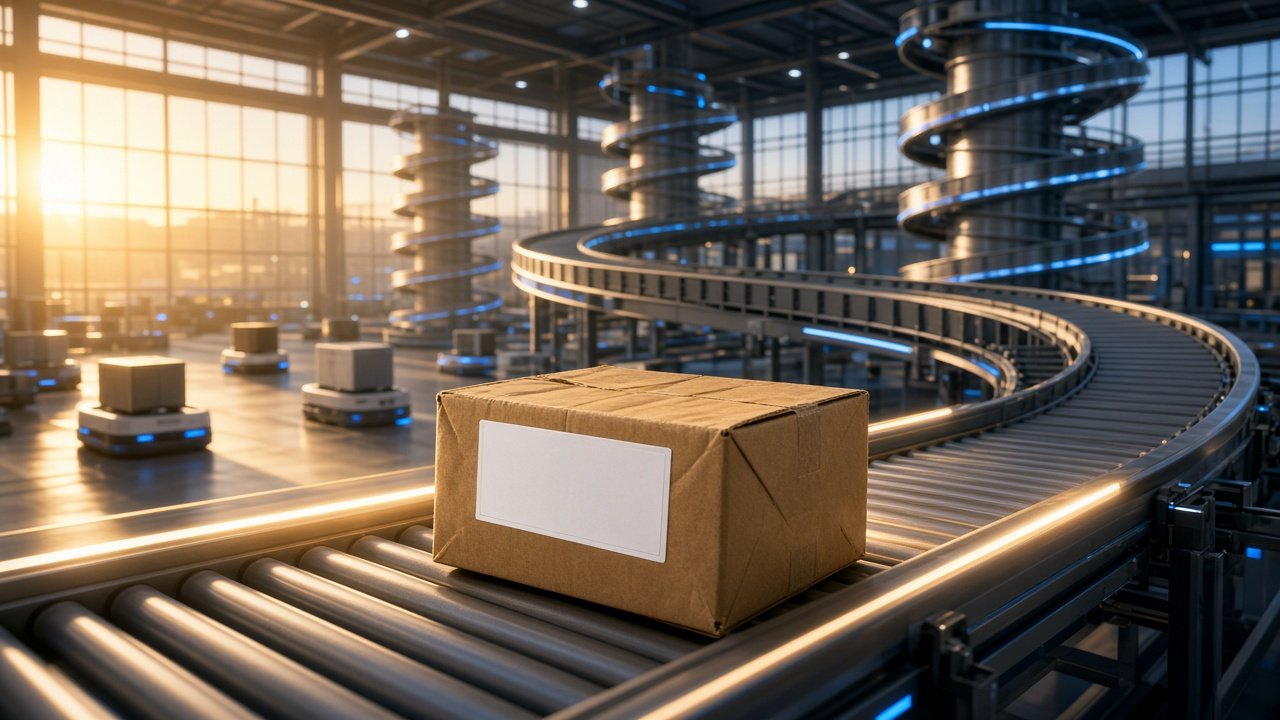
Soy una caja de cartón corriente. Mediana, algo arrugada en una esquina, con una etiqueta y un código que para mí lo dicen todo. Dentro viajan unas zapatillas que alguien pidió anoche desde el sofá, con el móvil en una mano y la esperanza en la otra. Esa persona no lo sabe, pero entre su clic y su timbre hay un lugar donde se decide casi todo: un almacén automatizado. Esta es la historia de mi paso por uno de ellos, el tipo de instalación que diseña, integra y mantiene MIM.
05:58. El muelle, donde empieza todo
Llego dentro de un camión, apretada entre cientos de cajas como yo. Antes, descargar un tráiler significaba horas de brazos, carretillas y espaldas cansadas. Hoy, un transportador telescópico se estira hacia el interior del camión como una lengua metálica y me recoge casi con delicadeza.
No es magia: es ingeniería pensada para que las personas trabajen mejor, no más. Si te pica la curiosidad, en MIM ya contamos cómo los transportadores telescópicos optimizan la carga y descarga. Yo solo sé que, por primera vez esta noche, me muevo sin que nadie tenga que levantarme.
06:01. Menos de un segundo para saber quién soy
Avanzo por una línea de transportadores de rodillos y, de repente, atravieso un arco lleno de ojos. Es un equipo de medición y clasificación como el MPW-24/VP de MIM, que combina tecnología RFID, pesaje electrónico y cámaras 3D. En menos de un segundo sabe cuánto mido, cuánto peso y qué llevo dentro según mi etiqueta.
Confieso que me sentí un poco desnuda. Pero entiendo para qué sirve: con esos datos, el sistema decide adónde debo ir, si quepo en una ubicación concreta y si algo no cuadra con el pedido. Un error detectado aquí cuesta un segundo; el mismo error detectado en casa del cliente cuesta una devolución, un enfado y, a veces, un cliente perdido. Aquí tienes más detalles sobre el equipo que mide, pesa, clasifica y registra la mercancía en menos de un segundo.
06:04. La autopista de rodillos
A partir de aquí el almacén se convierte en una ciudad. Hay calles rectas, curvas, subidas en espiral y cruces donde nadie pita. Los transportadores, ligeros o de carga pesada, por gravedad, motorizados o de banda, se configuran según el espacio de cada nave. Nada es de catálogo: cada recorrido se dibuja a medida de la operación del cliente.
Por el camino veo pasar robots móviles (AMR y AGV) que llevan contenedores de un lado a otro sin chocar con nadie. Me resultan simpáticos. Ellos también forman parte del ecosistema que MIM integra y mantiene, incluida su alianza con Hai Robotics para el mantenimiento de sus robots en España y Portugal.
06:09. Las personas que me eligen
Aquí viene mi parte favorita. En las zonas de picking, personas de carne y hueso preparan los pedidos. La automatización les acerca la mercancía y les quita kilómetros de pasillo, pero las decisiones finas siguen siendo suyas: revisar, combinar, comprobar que mis zapatillas son la talla correcta.
En uno de los proyectos de comercio electrónico de MIM, el sistema incluye tres zonas de picking para 64 operarios, conectadas por transportadores y una línea de inducción de alta velocidad. No es un almacén sin personas. Es un almacén donde las personas hacen lo que mejor saben hacer.
06:13. El baile del crossbelt
Y entonces llega el momento estelar: el sorter. Me subo a una pequeña bandeja con una cinta transversal propia, una de las muchas que giran en circuito como un carrusel muy disciplinado. Cuando paso frente a mi salida, la cinta se activa y me empuja hacia un lado con un gesto seco y preciso. Ni un golpe de más.
Un sorter crossbelt como los que integra MIM puede alcanzar capacidades de hasta 20.000 artículos por hora. En aquel proyecto de comercio electrónico, la instalación procesa más de 9.000 paquetes por hora. Entre tantos compañeros de viaje, yo solo soy uno, y aun así nadie me confunde con otro. Si quieres entender por qué esta tecnología se ha vuelto tan popular, MIM lo explica en por qué el crossbelt sorter es una buena solución en intralogística.
06:17. La sala que nunca duerme
Mientras yo bailaba, alguien vigilaba. No a mí exactamente, sino a todo lo que me movía: motores, rodamientos, bandas, sensores. MIM cuenta con una sala de control, Robomap, que funciona las 24 horas, los 365 días del año. Allí se cruzan datos de termografía, análisis de vibraciones y los indicadores de rendimiento que MIM llama SIGMIMONE.
La idea es sencilla y poderosa: detectar el fallo antes de que ocurra. Un rodamiento que se calienta un poco más de la cuenta hoy puede ser una parada mañana en plena campaña. Gracias al mantenimiento intralogístico integral, ese rodamiento se cambia en una ventana planificada y no a las cuatro de la madrugada con el muelle lleno de camiones. Más de 450 profesionales y más de veinte años de experiencia sostienen ese trabajo invisible desde MIM Services.
06:19. Rumbo a tu puerta
Poco después de bajar del camión, estoy en la rampa de expedición, junto a otras cajas que van a mi misma ciudad. Me suben a otro vehículo. Lo que pasa después ya es cosa del repartidor, y él tiene su propia historia que contar.
Yo me quedo con lo que he visto: máquinas que no se cansan, personas que no se rinden y un equipo que diseña, conecta y cuida cada pieza para que todo parezca fácil. Así trabaja MIM Automation en proyectos de España, Portugal, Alemania o Estados Unidos: soluciones a medida para moda, farmacia y cosmética, alimentación, industria y distribución.
La pregunta que me llevo
Cuando me abras, y lo harás deprisa, no pensarás en mí. Es normal. Pero quizá, la próxima vez que un pedido llegue justo cuando lo esperabas, te acuerdes de que detrás de esa puntualidad hay una coreografía de rodillos, cintas, robots y personas que nadie ve.
Y aquí va mi pregunta para quien dirige un almacén: si tu operación pudiera contar su propio diario, ¿sería una historia fluida o una lista de atascos? Si la respuesta te hace dudar, quizá sea buen momento para hablar con MIM.